How to Arrange Corporate Yoga in Luxembourg: A Practical Organiser’s Guide
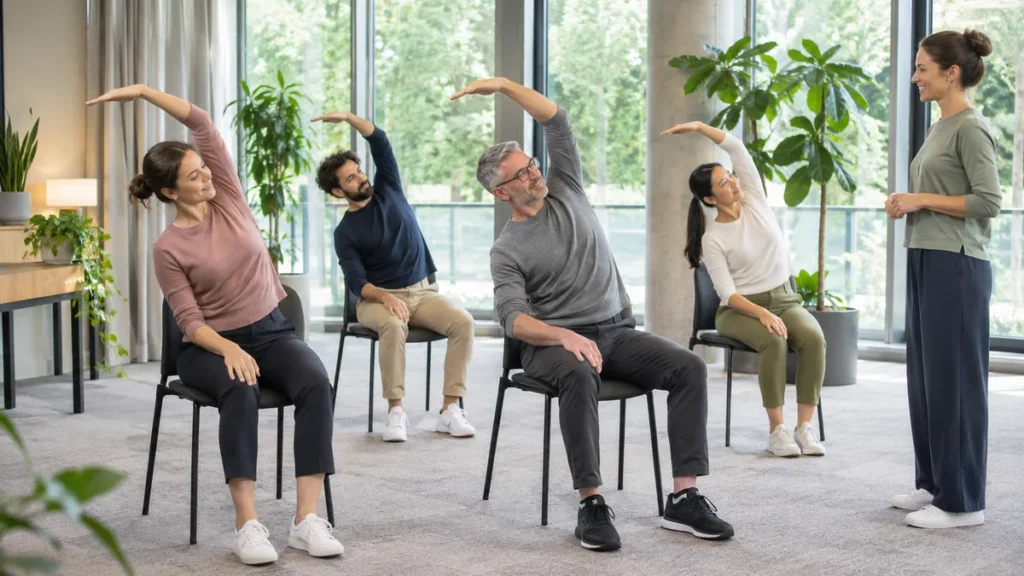
Organising a yoga session at work is mostly logistics. If the room, timing, equipment and teacher brief are sorted early, the class itself tends to go smoothly. This guide from Luxembourg Yoga is for HR teams, office managers and wellbeing committees who want to plan a workplace class or a series of classes. It covers what to check before you contact a provider and what to ask once you do.
Decide where the class will happen
Workplace yoga usually takes one of two forms: the teacher comes to your office, or your team goes to a studio. Some Luxembourg providers offer both. AUM says most of the companies it works with already have a sport area or a dedicated group-class space. It adds that in some cases a conference room can be used before or after working hours, as long as no meetings are booked Source. House of Om advertises welcoming teams into its own space, and also offers in-office classes and wellness sessions at the workplace Source.
If you’re using your own premises, walk through the room before you ask for a quote. Look for clear floor space once furniture is moved, a floor that is clean and not slippery, a temperature you can control, and some privacy from glass walls and corridors. Check that nobody is likely to walk in halfway through. Meeting rooms often have tables that are heavy or fixed in place, so find out in advance who will move them and who will put them back.
Work out a realistic group size
Group size depends on the room, not on how many people sign up. A useful first step is to lay a few mats out yourself to see how the space works, then share the room’s measurements, photos and that rough layout with the teacher. Agree the capacity together. The right number depends on the class format as well as the floor space: a gentle seated or standing session needs different spacing from a dynamic flow with lunges and arm movements. The teacher also needs room to move around and give people individual attention. If more people are interested than the room holds, consider running repeat sessions or a rotating sign-up list rather than packing everyone in.
Sort out equipment
Clarify who provides mats, blocks, straps and cleaning materials. Some providers bring equipment and some expect participants to bring their own. Even when a provider’s website mentions equipment, confirm exactly what is included for your group size and whether it’s in the quote. If you plan to buy mats for the office, think about storage and cleaning between sessions. Also ask whether the teacher needs a speaker, a power socket or blinds to lower the light.
Brief staff on clothing and practicalities
Send a short note to participants before the first session. Tell them to wear comfortable clothes they can move in, and say where they can change. Many offices don’t have showers, which is one reason a gentler class can suit a lunchtime or late-afternoon slot. Ask the teacher what footwear suits the class and the floor, and pass that on, along with a reminder to bring water. Make it clear that taking part is voluntary and that people can rest or skip any pose. Anyone with health concerns should speak to the teacher privately or check with their own doctor.
Plan building access
This step is easy to forget. Check with your facilities team or building management how a visiting teacher will get in, whether that’s by badge, reception sign-in or a security procedure, and whether different rules apply for early-morning or evening sessions. Give the teacher the full address, the entrance to use and a contact phone number. Tell them about parking or the nearest tram or bus stop, and how long it takes to get from the entrance to the room. If they’re bringing mats, check that there’s a lift or a loading point. Choose someone on site to meet them for the first session.
Write a clear teacher brief
A good brief helps the teacher plan the right class. Include how many people you expect and their rough experience level, how long the session is, what the room is like, and what the team wants from it, for example something calm, a short stretch break, or something more energetic. AUM lists gentle, dynamic and classic yoga among its workplace options Source, and House of Om says it adapts sessions to the team’s goals, schedule and energy Source. If you’re not sure which approach fits, our guide to yoga styles explains the main differences. Tell the teacher which language or languages to teach in, since that matters in a multilingual workplace.
Questions to ask in a quote request
When you contact providers, a few clear questions save a lot of back-and-forth. Ask:
- What exactly is included in the quote: teaching time, travel, equipment and any preparation.
- Whether the price changes depending on group size or the number of sessions.
- What the cancellation and rescheduling terms are.
- Whether the teacher has insurance, and what qualifications they hold.
- Which languages they teach in.
- Whether you can try one session before committing to a series.
- How they handle mixed levels and participants who mention injuries.
Ask for the answers in writing so you can compare providers fairly.
If your group is very small, or a senior team wants something more tailored, a private format may suit better. Our private yoga in Luxembourg guide covers how that works.