Private Yoga Lessons in Luxembourg: How to Plan Individual Tuition That Works
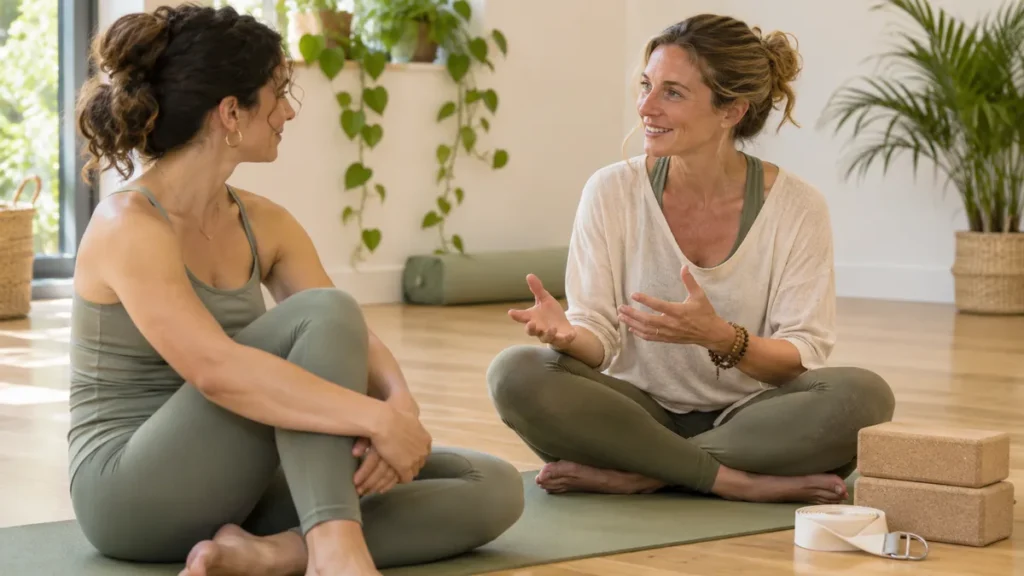
A private yoga lesson lets a teacher shape the session around you: your pace, your questions and what you want out of practice. In Luxembourg, where people often work across several languages and keep busy schedules, individual tuition can feel especially practical. The value depends on planning, though. This guide covers what to think through before you book, so your first private session is useful from the start.
If you’re new to yoga in general, start with our guide to yoga for beginners in Luxembourg. You can find more practical guides to practising in the country on the Luxembourg Yoga home page.
One-to-one or small-group tuition?
In one-to-one tuition the whole session is about you. The teacher can watch how you move, adjust their instructions as you go, and spend as long as needed on one posture or idea. It suits people who want detailed feedback, who feel self-conscious in a full class, or who want help building a home practice.
Small-group private tuition means two or more people, maybe a couple, friends or colleagues, booking a teacher together. It can be more sociable and the cost may be shared, but the teacher has to balance different needs and levels. Not every teacher or studio offers this, so ask directly whether they take small private groups, how many people they accept, and whether the price changes with the number of participants.
Agreeing a useful goal
The most productive private lessons have a clear purpose. Before booking, try to put into a sentence or two what you want. You might want to learn the basics properly before joining group classes. You might want to understand a particular style, build a short routine to do at home, or work on specific postures you find confusing.
Before your first session, tell the teacher about your experience and any relevant health concerns.
It can also help to choose a style before you start. Some styles concentrate on precise alignment, others on flowing movement or slow, quiet holds. Our guide to yoga styles explains the main differences.
Defining the session scope
Once you’ve agreed the goal, settle the practical scope. Ask how long a session lasts, whether the first meeting includes time to talk before you practise, and whether the teacher suggests one session or a short series. If you want to build a home practice, ask the teacher how much support would help: is one session enough to get you started, or would a few follow-up lessons with practice time in between suit you better?
Ask, too, whether you’ll take anything away, such as a written sequence or notes on what you covered. That makes it much easier to keep going on your own.
Venue: where will the lesson take place?
Some private lessons take place in a studio. Iyengar Yoga Luxembourg, for example, has a studio in the centre of Luxembourg City and advertises private classes alongside its regular timetable. Its page asks people to call the teacher directly to arrange them Source.
Other arrangements may be possible with some teachers, but don’t assume that. Ask where sessions can happen, whether there are any options beyond the studio, and how to get there, including parking or public transport if you’re travelling across the city.
Language
Luxembourg’s multilingual setting makes language worth checking early. Understanding instructions clearly matters even more in a private session, where the teacher may explain fine details of movement and breathing.
Teacher profiles can give you a useful starting point. Iyengar Yoga Luxembourg lists Floriane as speaking French and English, and Beata as speaking English and Russian Source. When you get in touch, confirm which language your session will be taught in.
Equipment
Ask what’s provided and what you should bring. Check whether mats and props such as blocks, straps or blankets are available for your session, or whether you should bring your own. If you’re working towards a home practice, ask which props would actually help you so you don’t buy things you won’t use. Wear comfortable clothes you can move freely in, and ask whether there’s somewhere to change.
Booking terms
Before you confirm, make sure you understand how booking works. Useful questions include how to book and pay, whether there are single sessions or packages, what the cancellation and rescheduling policy is, and how much notice is needed. If you’re booking for a small group, ask how cancellations work if one person can’t come.
Getting these points agreed in writing, even by email, keeps things simple for you and the teacher.
Making the most of private tuition
Go into your first lesson with a clear goal, an agreed scope and the practical details settled, and the session can be about the practice. Afterwards, think about what helped, practise what you learned, and take any new questions to your next lesson.